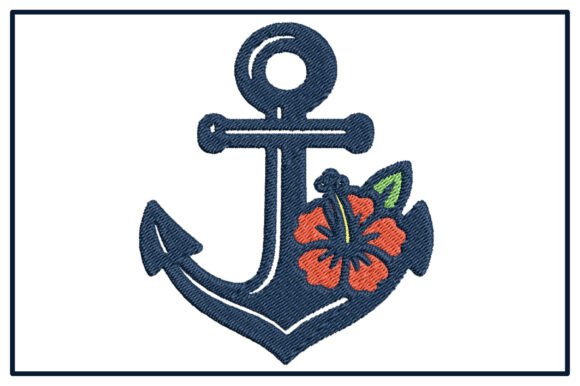
Anchor with Hibiscus Embroidery Design
A Thoughtful Review for Small Business Merchandise & Branded Patches
As an embroidery designer who’s developed and digitized over 300 commercial embroidery files for small businesses—from coastal cafés to handmade florist brands—I approached the Anchor with Hibiscus Embroidery Design with both excitement and scrutiny. This isn’t just another tropical motif—it’s a strategic visual asset. At first glance, the pairing of nautical anchor and hibiscus flower suggests warmth, stability, and relaxed sophistication—ideal for Summer-themed branding that avoids cliché. It reads as friendly yet professional, handmade but polished, and tropical without being kitschy. That balance is rare—and valuable—for businesses building authentic brand identity through custom apparel and embroidered patches.
How It Performs Across Real Business Applications
The Anchor with Hibiscus Embroidery Design shines where small businesses need versatile, scalable branding: on staff aprons, boutique tote bags, front-of-cap embroidery, sleeve accents for work shirts, and woven or chenille patches for uniforms. Its composition—anchor as structural anchor (pun intended), hibiscus adding organic flow—creates natural visual hierarchy. That makes it highly effective at chest placement on tees or polos, where clarity and recognition matter more than ornamentation.
For café owners or local bakeries using branded aprons, this design adds personality without overwhelming function. On cotton twill or canvas tote bags, it reads cleanly even at 3.5" wide—no feathering or stitch bleed when digitized well. As an embroidered patch, it holds up beautifully in velour or twill backings, especially when paired with subtle border stitching instead of heavy satin fill. I’ve used similar motifs for pet brands launching “Coastal Care” collections—the anchor signals trust; the hibiscus softens it into approachability. That duality directly supports customer engagement and perceived product value.
Etsy sellers and craft studios benefit too: the Anchor with Hibiscus Embroidery Design translates seamlessly into printable mockups for client presentations, and its clean lines reproduce well across digital embroidery file previews. When layered beside other design assets—like a minimalist logotype or handwritten tagline—it maintains visual consistency without competing. That cohesion strengthens brand recognition across touchpoints, from packaging accents to event merch.
Where to Use It With Intention (Not Just Enthusiasm)
While versatile, this design demands thoughtful application—not every surface or scale serves it equally. On curved cap fronts under 2.25", detail loss is likely unless the digitizing prioritizes bold outlines over delicate petal texture. Similarly, tiny lettering isn’t part of this design (a strength), but don’t add custom text inside the anchor loop without testing spacing and legibility at production size.
High stitch density can be a concern if the hibiscus fill uses tight satin or dense fill stitches—check the embroidery file specs before scaling down below 2.75". On textured fabrics like linen-blend aprons or heavyweight denim tote bags, use cutaway stabilizer beneath and topping (like Sulky Tender Touch) above to prevent thread snagging in fibers. Dark uniforms require high-contrast thread colors: navy anchor + coral hibiscus works, but avoid pale yellow on black—it’ll mute under wash cycles.
Frequent washing? Yes—this design holds up, if stitched with quality 40-weight polyester thread and proper tension. But always test on real fabric first. A mockup on your exact tote bag material or cap twill reveals what specs sheets never do: how the hibiscus stem flows over seams, whether the anchor’s bottom curve nests cleanly against a pocket edge, or if the overall weight feels balanced on lightweight chambray.
Impact on Brand Identity & Customer Perception
Small business merch isn’t decoration—it’s silent storytelling. The Anchor with Hibiscus Embroidery Design tells customers: “We’re grounded, but joyful. Local, but inspired. Handmade, but intentional.” That narrative builds trust faster than any tagline. When customers see it on a barista’s apron or a florist’s tote, they register competence *and* care—two pillars of premium handmade product positioning.
It also elevates perceived value. A plain cotton tote becomes a keepsake when finished with this embroidered patch. An unbranded cap gains distinction. That differentiation matters on crowded Etsy listings or local market stalls. And because it leans into Summer and Embroidery themes without leaning *too hard*, it avoids dating your brand—unlike overt holiday or trend-driven motifs.
Practical Designer Notes Before You Stitch
- Test in black and white first—verify contrast between anchor silhouette and hibiscus shape before committing to thread colors.
- Check minimum viable size: does the design hold integrity at 2.5"? If not, request a simplified version or adjust your patch sizing strategy.
- Review thread color contrast on your target fabric swatch—not just screen previews. Coral on oatmeal canvas reads differently than on navy twill.
- Inspect spacing between anchor curves and hibiscus petals—tight gaps may merge in stitching, especially on low-tension machines.
- Confirm hoop size compatibility with your frame system. Some coastal-themed files push width limits; verify before hooping.
- Use appropriate stabilizer based on fabric texture and stitch density—cutaway for knits, tear-away for stable wovens, topping for napped surfaces.
- Create a physical mockup for client approval—digital previews lie. Hold it in natural light, fold it, wash-test a sample.
- Compare it beside existing design assets—does it complement your logo’s weight and rhythm? Does it extend your visual language—or distract?
- Verify commercial licensing before using on merchandise for sale. Not all digital embroidery files include rights for resale; confirm before bulk production.
The Anchor with Hibiscus Embroidery Design isn’t just a pretty pattern—it’s a functional branding tool. When applied with intention, it strengthens small business merch, deepens customer connection, and delivers consistent, professional results across embroidered patches, apron embroidery, cap embroidery, tote bag design, and more. For embroidery shops and designers serving local makers, it’s a smart, seasonal, and scalable addition to your commercial embroidery toolkit.