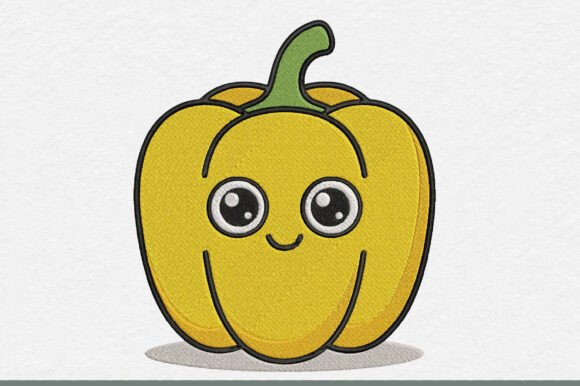
Cute Bell Pepper Embroidery Design Print
First Impression: Playful, Fresh & Instantly Recognizable
As an embroidery designer who’s curated over 200 craft fair booths in the past decade, my gut reaction to Cute Bell Pepper Embroidery Design Print is immediate: it’s joyful, food-forward, and unapologetically kawaii—without leaning into cliché. Though the product description mistakenly says “pumpkin,” the title clearly anchors it in Food, and that matters. A bell pepper reads as vibrant, healthy, garden-fresh, and unexpectedly charming—especially with smiling features. It lands somewhere between modern farmhouse and cheerful boutique: not too rustic, not too cartoonish, just right for handmade markets where shoppers seek personality *and* polish.
Where It Shines on Craft Fair Products
This design thrives where authenticity meets utility. On a tote bag design, it pops best centered on the front panel—large enough to read from three feet away, small enough to leave room for branding or a coordinating monogram. As apron embroidery, it works beautifully above the pocket: friendly, functional, and photo-ready. For tea towel embroidery, place it near the top hem—it avoids moisture-heavy zones while adding visual lift to a kitchen staple. As an embroidered patch, it scales down cleanly (more on that below), making it ideal for kids’ backpacks, denim jackets, or market bag tags.
It also elevates smaller handmade product formats: think fabric pouches for seeds or spices, pillow covers for a sunroom nook, or embroidered caps for farm-to-table vendors. Unlike overly intricate motifs, Cute Bell Pepper Embroidery Design Print holds attention without overwhelming. At a crowded craft fair, that’s gold—it invites a smile, then a stop, then a purchase.
Online Appeal: Strong Thumbnail, Stronger Mockup
For Etsy sellers and digital sellers, this design performs well in listings—but only if paired with smart printable mockups. Its high-contrast shape (rounded pepper body + expressive face) photographs crisply on light and medium fabrics. Avoid placing it directly on busy prints or ultra-textured weaves unless you’ve tested contrast first. As a digital embroidery file, it’s inherently shareable—ideal for bundling with seasonal collections (e.g., “Farm Stand Favorites” or “Kawaii Kitchen Bundle”). Just remember: its charm lies in simplicity, so keep listing visuals clean, bright, and context-rich (e.g., stitched on a linen tea towel beside fresh peppers).
Practical Production Notes Every Embroiderer Should Know
Cute Bell Pepper Embroidery Design Print is batch-friendly—but not foolproof. Here’s what I check before cutting my first hoop:
- Stitch density: Smiling faces and curved stems often pack dense fills. If your machine stutters or fabric puckers, reduce density by 5–10% or add lightweight tear-away stabilizer underneath.
- Fabric texture: Works reliably on cotton, linen, and medium-weight canvas—but tread carefully on terry cloth towels or thick denim. Test on scrap first; consider simplifying inner details for highly textured surfaces.
- Hoop size & placement: Designed for standard 4×4 hoops? Great for patches and apron pockets. Larger versions may need 5×7—confirm before ordering or digitizing. Always measure your target product area first.
- Thread colors: Kawaii style relies on vivid contrast—think lime green pepper + white highlights + black eyes. Use high-sheen polyester thread for pop, especially on darker fabrics.
- Small detail risk: Tiny eyes or stem lines may blur on dark fabric or at sub-3-inch sizes. If offering mini patches or keychain versions, verify clarity at 1.5 inches wide.
Booth Impact & Buyer Engagement
In person, Cute Bell Pepper Embroidery Design Print builds instant rapport. It’s not intimidating, not ironic—it feels warm, approachable, and proudly handmade. I’ve watched customers point and say, “That’s *so* me,” while holding a pepper-shaped ceramic mug nearby. That cross-category resonance—Food meeting Embroidery—makes it a natural conversation starter at your booth. Pair it with real bell peppers in a basket or a chalkboard sign saying “Grown with Love,” and you’ve got layered storytelling that sells.
It also strengthens brand consistency for small shop owners: use it across tote bags, tea towels, and gift tags, and your line feels intentional—not random. And because it reads clearly even in motion (i.e., when someone walks past your table), it boosts booth display strength without needing oversized signage.
Designer-to-Designer Checklist Before You Sell
Before stitching your first craft fair product or uploading to Etsy:
- Test the machine embroidery design on scrap fabric matching your final product’s weight and weave.
- Check thread contrast on both light and dark fabric swatches—especially around facial details.
- Review spacing: does the stem clear seam allowances? Does the smile sit comfortably above pocket hems?
- Confirm hoop size compatibility with your most-used embroidery machines—and your smallest product panels.
- Inspect stitch density visually: no muddy areas, no thread nesting, no skipped jumps.
- Use appropriate stabilizer—cutaway for stretchy knits, tear-away for stable wovens, fusible for lightweight linens.
- Create at least one real-life mockup (not just digital): photograph it in natural light, held by hand, next to related items.
- Compare fabric colors side-by-side—some greens shift dramatically under indoor lighting.
- Verify commercial licensing status. If selling finished products, ensure your digital embroidery file includes rights for end-use production.
Final Thought: A Small Design With Big Market Sense
Cute Bell Pepper Embroidery Design Print isn’t just cute—it’s commercially intelligent. It bridges seasons (spring gardens, summer farmers’ markets, fall harvest fairs), speaks to multiple audiences (cooks, gardeners, kawaii lovers, eco-conscious shoppers), and fits seamlessly into both physical booths and digital storefronts. It doesn’t shout—but it lingers. In a sea of generic florals and overdesigned quotes, this is the kind of small shop product that gets remembered, shared, and reordered. Just stitch it with care, sell it with confidence, and let the pepper do the talking.