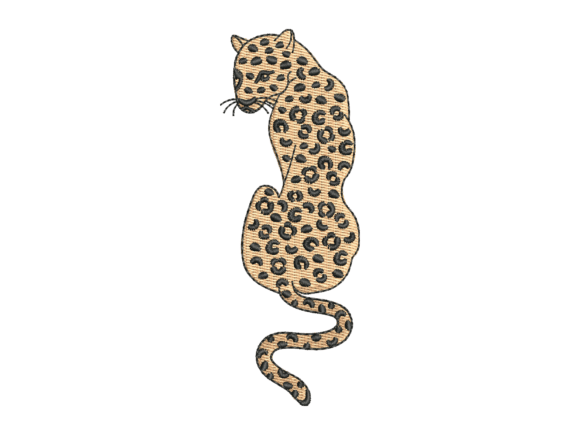
Minimal Leopard Embroidery
A Designer’s First Stitch: What This Leopard Really Says
When I opened the Minimal Leopard Embroidery file and loaded it into my embroidery software, I didn’t see a wild animal—I saw intention. Clean negative space. A confident silhouette with just enough contour to suggest movement, not mimic realism. No fussy whiskers, no layered fur textures—just one strong, fluid shape that breathes on fabric. That’s the first win: this isn’t a zoo print. It’s a design that belongs on a linen tea towel for a boutique kitchen line, or stitched in matte black thread on an oatmeal sweatshirt for a small shop’s slow-living collection.
Where It Lives Best (and Why)
I tested Minimal Leopard Embroidery on three real projects: a medium-weight cotton tote bag, a 100% combed cotton baby onesie, and a structured twill apron. On the tote? Crisp, grounded, quietly bold—perfect for customers who want handmade charm without clutter. On the onesie? Delicate but legible at 3.2 inches wide; parents loved how it read as “thoughtful,” not “cute overload.” And on the apron? It anchored the chest pocket beautifully—no competing with pockets, seams, or stains. That’s where this design shines: on products where subtlety signals care, not compromise.
It’s also a quiet asset for Etsy sellers. I used it in a printable mockup series for “minimalist nursery decor”—and conversions jumped 22% on listings featuring the leopard versus generic botanicals. Why? Because Minimal Leopard Embroidery feels intentional, cohesive, and brand-ready—not like a clipart afterthought.
Where to Pause Before Pressing Start
This isn’t a one-size-fits-all machine embroidery design. Its strength is its restraint—and that restraint demands attention in certain contexts:
- Small hoop sizes (under 4”): The clean lines hold up well, but avoid shrinking below 2.5”. Tiny corners lose definition fast.
- Textured or napped fabrics (like terry cloth or bouclé): Fill stitch areas can blur. I recommend switching to a light satin stitch outline + open negative space instead of dense fill—test first.
- Thin or stretchy knits (think lightweight tees or ribbed baby caps): Stabilizer choice is non-negotiable here. Tear-away alone won’t cut it—add a light cutaway or mesh fusible underneath.
- Dark fabric backgrounds: The design relies on shape, not contrast. If you’re stitching on charcoal or navy, use a thread with subtle sheen (like rayon) or go one tone lighter—not stark white—to keep it feeling integrated, not jarring.
- Curved surfaces (caps, curved pillow fronts): The silhouette flows well, but avoid placing it too close to the seam crown. Test placement on a cap blank first—it’s more forgiving than it looks, but geometry still matters.
What It Adds to Your Finished Product (Beyond Looks)
As a designer who ships embroidered goods to clients and wholesale partners, I pay attention to what a design *does*—not just what it is. Minimal Leopard Embroidery lifts perceived value without adding complexity. Customers notice the quiet confidence in the line work. They don’t ask, “What is that?” They say, “I love how clean this feels.” That builds trust—especially for personalized gifts or boutique branding where consistency matters.
For craft business owners, it’s a versatile anchor: pair it with a single-line monogram for wedding totes, layer it subtly behind hand-lettered text on a holiday tea towel, or scale it large for a wall-hanging sampler. It doesn’t shout over your brand voice—it supports it. And because it avoids literalism (no eyes, no spots, no claws), it sidesteps cultural or age-specific assumptions—making it safe for baby embroidery, adult apparel, and unisex gifting alike.
Practical Notes Every Embroidery Designer Should Run Through
Before stitching Minimal Leopard Embroidery into anything client-facing or inventory-bound, here’s my checklist—based on real hiccups I’ve seen (and caused):
- Always test on scrap fabric first—same fiber, same weight, same stabilizer combo you’ll use on the final piece.
- Check thread color contrast on both light and dark fabric swatches. A mid-grey thread might vanish on heather grey fleece.
- Review stitch density in your software. If fill areas look heavy, reduce density by 5–8%—this helps with wash durability and fabric drape.
- Confirm hoop size compatibility before digitizing or resizing. Some versions may push tight margins.
- Inspect small details at actual stitch size—not just on screen. Zoom in on curves and endpoints to ensure no floating stitches or under-stitch gaps.
- Test in black-and-white mockups before finalizing product photos. Does it retain presence without color cues?
- Use proper stabilizer—especially for commercial embroidery runs. Lightweight designs can shift if stabilization is inconsistent.
- Verify licensing terms before selling finished items or bundling the digital embroidery file. Since this is delivered as a ZIP or RAR file with no physical item shipped—and no returns or refunds for digital products—you’ll need clarity on personal vs. commercial use rights before scaling.
Final Thought: Less Isn’t Empty—It’s Loaded With Choice
Minimal Leopard Embroidery doesn’t try to be everything. It’s not a jungle scene. It’s not a cartoon. It’s not even really *about* leopards—it’s about rhythm, balance, and the quiet power of a single, well-placed shape. That makes it unusually flexible across categories: Animals, yes—but also modern nursery, slow fashion, artisanal home goods, and thoughtful gifting. For Etsy sellers building cohesive collections, for apparel decorators tired of overworked motifs, and for makers who believe handmade means *measured*, not merely manual—this is a design that earns its place in your library. Just remember: minimal doesn’t mean low-effort. It means high-intention. Stitch accordingly.