Funny Raccoon Embroidery Design
First Impression: Humor with a Hint of Sass
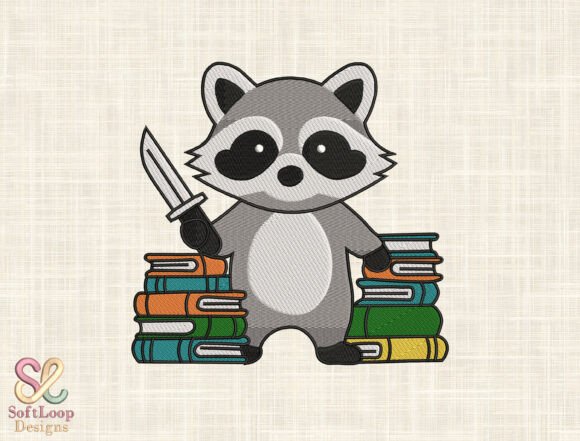
As an embroidery designer who’s prepped over 200 craft fair booths, I can tell you—Funny Raccoon Embroidery Design lands instantly. It’s not just cute; it’s threatenly cute, as the description says—and that’s gold for handmade markets. The raccoon + bookworm + knife combo 🦝📚🔪 reads bold, modern, and slightly irreverent—perfect for shoppers who love personality-driven handmade products. It avoids farmhouse clichés, skips over-precious minimalism, and doesn’t lean into holiday or seasonal limits. This is year-round, shelf-stable charm with attitude.
Where It Shines on Craft Fair Products
In my booth setup—tote bags front-and-center, aprons draped over a wooden rack, tea towels folded beside embroidered patches—I’ve tested how designs perform under real foot traffic. Funny Raccoon Embroidery Design stands out strongest on:
- Tote bag design: Centered on natural canvas or oat linen, it reads clearly from 6 feet away—especially with high-contrast thread colors. The raccoon’s expression holds up even at 4.5" wide.
- Apron embroidery: Placed above the pocket (not on the bib), it adds wit without overwhelming utility. Buyers love “I mean business… but also read” energy.
- Embroidered patch: This is where it becomes a repeat-buy item. Sew-on or iron-on versions fly off tables—especially when bundled with matching pins or stickers.
- Tea towel embroidery: Works beautifully on medium-weight cotton towels. The books and knife add visual weight that balances the fabric’s texture without sinking into the weave.
- Pillow covers & small pouches: At 3–3.5", the design retains legibility and character—making it ideal for giftable handmade items priced at $28–$42.
It’s less effective on curved surfaces like caps unless resized to 2.25" max—and even then, test stitch density carefully. On dark fabric, avoid light gray or beige thread; go bold with navy, charcoal, or mustard for clarity.
What Makes It Sell—Beyond the Smile
This isn’t just another animal quote—it’s a conversation starter. At craft fairs, buyers pause, point, and say, “Oh! Is that *my* vibe?” That moment of recognition converts fast. As an Etsy seller and small shop product developer, I’ve seen raccoon-themed listings outperform generic florals in Q3–Q4—especially among educators, librarians, indie bookstore lovers, and creative professionals aged 28–45.
The Animal Quotes category benefits from emotional resonance, and Funny Raccoon Embroidery Design delivers layered storytelling: intelligence (books), mischief (raccoon), readiness (knife)—all in one compact machine embroidery design. That depth translates to higher perceived value: customers pay more for finished product because it feels intentional, not decorative.
Production Reality Check
Before batch-producing, here’s what I always verify:
- Test the design on scrap fabric—especially if using textured towels or thick denim for market bags. Dense stitch areas (like the raccoon’s fur or book spines) can pucker without proper stabilizer.
- Check thread contrast on both light and dark backgrounds. That tiny knife detail? It vanishes on black fabric with silver thread—swap to metallic gunmetal or deep burgundy instead.
- Review spacing between elements. If the books crowd the raccoon’s paws or the knife overlaps text, reposition before digitizing further.
- Confirm hoop size and whether your embroidery machine handles the full layout in one pass—or if it requires re-hooping (a time-killer during craft fair prep).
- Inspect stitch density. Over 12,000 stitches? Consider simplifying the bookshelf background for tea towel embroidery where fabric breathability matters.
- Use the right stabilizer: Tear-away for stable cottons, cut-away for knits or stretchy pouch fabrics, and water-soluble for delicate pillow cover linens.
- Create at least one real mockup—not just a printable mockup. See how light hits the threads in person. Does the raccoon’s eye pop? Does the knife glint?
- Compare fabric colors side-by-side: oat, charcoal, sage, and terracotta all change how the design reads. A warm cream base makes the raccoon feel cozier; slate gray adds quiet confidence.
- Confirm commercial licensing before selling finished product. If this is a digital embroidery file you’re sourcing, ensure it permits resale of physical goods—not just personal use.
Booth & Brand Impact
On display, Funny Raccoon Embroidery Design strengthens booth cohesion when used across 3–4 product types with consistent thread palette (e.g., forest green + cream + charcoal). It signals brand voice: clever, handcrafted, unpretentious. For boutique makers building a signature line, this design works as a hero motif—paired with subtle secondary motifs (tiny paw prints, open books) for repeat engagement.
Photography for Etsy listings is effortless: flat-lay the tote with a vintage library card tucked in the pocket, or drape the apron over a stack of hardcover novels. Because it’s inherently narrative, it needs less styling—and converts better than abstract patterns in search results.
Careful-Use Notes for Long-Term Success
Don’t skip these:
- Avoid scaling below 2.75" — tiny lettering and fine knife details blur on small pouches or cap fronts.
- Thick fabric (like duck canvas market bags) demands reduced stitch density or alternate fill patterns to prevent stiffness.
- Textured towels may hide subtle shading—opt for bold outlines and fewer gradient fills.
- Curved cap surfaces distort proportions. Resize and re-digitize rather than stretching the original embroidery file.
- Dark fabric absorbs light; boost contrast with matte-black thread or tone-on-tone depth (e.g., charcoal on black).
When executed well, Funny Raccoon Embroidery Design does more than decorate—it builds connection. It turns a $12 tote into a talking point, a $24 pillow cover into a keepsake, and your booth into a destination. That’s not just embroidery. That’s handmade strategy.