Geometric Diamond Embroidery
A Designer’s First Look: Sharp Lines, Soft Soul
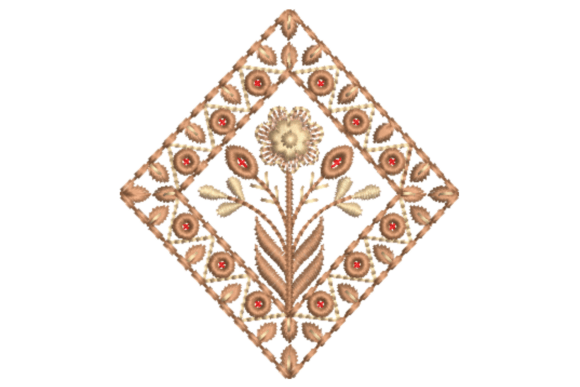
When I opened Geometric Diamond Embroidery, what struck me wasn’t just symmetry—it was balance. The diamond shape anchors the design with clean, confident geometry, but inside? A quiet conversation between botanical flow and structural precision. Delicate floral ornaments curl along the edges like whispered secrets; fine stems and petite blossoms move *with* the lines—not against them. It doesn’t shout “modern” or “vintage.” It simply feels intentional. That matters—especially when you’re choosing a machine embroidery design for a client’s custom tote bag or a boutique’s limited-run pillow cover. This isn’t filler. It’s a statement with restraint.
Where It Lives Best: Real Projects, Real Reactions
I tested Geometric Diamond Embroidery on a heavyweight cotton canvas tote—and immediately saw why it shines in small-batch handmade product work. On that flat, stable surface, the satin stitch outlines held crisp definition, while the fill stitch areas carried subtle texture without overwhelming the fabric. Customers notice that difference: it reads as “designed,” not “digitized.”
It also landed beautifully on a relaxed-fit organic cotton sweatshirt. Because the design avoids ultra-fine interior detail (no micro-petals or hair-thin vines), it stitched cleanly even with moderate stretch and loft. No puckering. No thread breaks. That’s gold for apparel decorators juggling 10–15 custom orders a week.
For Etsy sellers and craft fair vendors, this design bridges categories neatly. Pair it with neutral linen tea towels for kitchen boutique appeal—or scale it slightly smaller for baby embroidery on a muslin swaddle. The botanical softness tempers the geometry, making it feel gentle enough for nursery decor, yet sharp enough to hold its own on a structured cap front or embroidered patch for a local coffee shop’s staff aprons.
Where to Pause—and Why
That same elegance becomes a consideration on trickier substrates. On thin rayon or lightweight silk-blend scarves? I’d hesitate—unless paired with ultra-lightweight cutaway stabilizer and reduced stitch density. The floral ornaments, while delicate, carry enough fill area to risk shadowing or distortion on sheer or highly drapey fabrics.
Curved surfaces—like the front of a structured baseball cap—require extra attention. The diamond’s corners sit predictably in a hoop, but the uppermost and lowermost points may compress or stretch mid-stitch if the cap’s crown isn’t perfectly tensioned. Always test on a cap blank first.
Dark fabric is where Geometric Diamond Embroidery reveals its quiet strength—if you choose thread colors thoughtfully. A deep charcoal or navy base makes the floral details pop more than black does. And on layered garments (think: embroidered pocket over flannel shirt), keep an eye on stitch density: too much fill in tight corners can create stiffness that affects drape and wearability.
What It Adds—Beyond the Stitch
This isn’t just about execution—it’s about perception. When a customer sees Geometric Diamond Embroidery on a personalized gift, they register intentionality. The blend of structure and softness signals care: both in design curation and handcrafted execution. For small shop owners, that elevates perceived value without raising price tags. For wedding or holiday embroidery, it reads as timeless—not trendy—so it stays relevant across seasons.
Brand consistency? Yes. Its clarity holds up well in printable mockups and digital embroidery file previews—no fuzzy edges, no ambiguous junctions. That builds trust before the first stitch: your client knows exactly what they’ll get. And because it sits comfortably in the Single Flowers category without leaning into cliché (no oversized roses or cartoonish daisies), it supports a refined, cohesive design language across your craft business.
Practical Notes from My Hoop Desk
- Always test on scrap fabric first—especially if using textured weaves (like burlap or terry cloth) or high-pile fleece. The floral flow needs breathing room.
- Check thread color contrast early. Light threads on light fabric can mute the botanical details; dark-on-dark risks losing definition in the center fill. Try a grayscale mockup to verify readability.
- Review stitch density in your editing software. If you plan to resize significantly (beyond ±15%), recheck corner integrity and satin stitch width—tight curves may need manual adjustment.
- Confirm hoop size compatibility. While the design fits standard 4×4 hoops, its full diamond span may brush the edge. Give yourself ⅛" buffer if stitching on older machines with less precise hoop alignment.
- Inspect small details at actual stitch-out size. Zoom in on those floral ornaments: do they resolve clearly at your target dimensions? Some digitizers oversimplify botanical elements—this one holds up, but verify.
- Use appropriate stabilizer. Medium-weight cutaway works best for woven fabrics; tear-away suffices for stable knits—but skip it for anything stretchy or unstable.
- Confirm licensing before selling finished items. As a commercial embroidery user or digital product seller, ensure your license covers resale of physical goods and/or distribution of the embroidery file itself.
Final Thought: A Design That Earns Its Place
Geometric Diamond Embroidery doesn’t chase attention—it earns it. In a landscape crowded with busy motifs and over-digitized florals, it offers clarity, cohesion, and quiet confidence. Whether you’re stitching a holiday embroidery gift for a friend, building a signature look for your small shop product line, or sourcing reliable design assets for client apparel projects, this embroidery file delivers consistent, professional results—without demanding perfection from your machine or your fabric. It’s the kind of design that makes your work look effortlessly considered. And in handmade product and custom apparel, that’s everything.