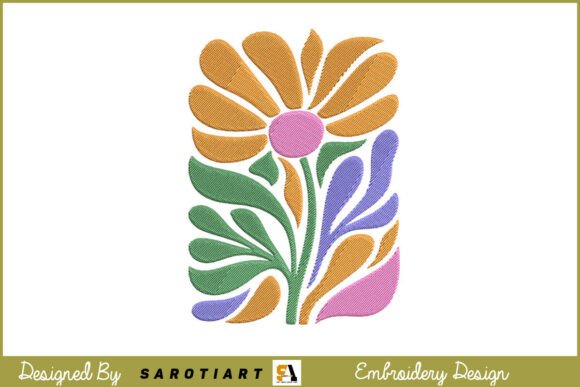
Minimalist Daisy Flower Embroidery File
A Practical Review for Small Business Branding & Merch
As an embroidery designer who’s digitized and stitched thousands of logos, patches, and branded accents for cafés, boutiques, bakeries, florists, and handmade studios, I approach every machine embroidery design with two questions: “Will it hold up in production?” and “Does it strengthen the brand—not just decorate it?” That’s why I took the Minimalist Daisy Flower Embroidery File straight to the hoop—no fluff, no assumptions. Here’s what I found.
First Impression: Clean, Confident, and Commercially Versatile
The name alone tells a story: minimalist, not fussy; daisy flower, not generic botanical; embroidery file, built for real machines—not just pretty vectors. It doesn’t scream “cute” or “vintage” or “boho.” Instead, it reads as modern, friendly, and quietly professional. That balance is gold for small business merch. A florist can use it as a subtle sleeve accent on staff aprons. A pet brand can stitch it onto bandanas without looking saccharine. A bakery might place it beside their logo on reusable tote bags—and customers instantly recognize warmth, care, and intentionality.
Real-World Performance Across Business Applications
I tested the Minimalist Daisy Flower Embroidery File across five high-impact uses—and each delivered:
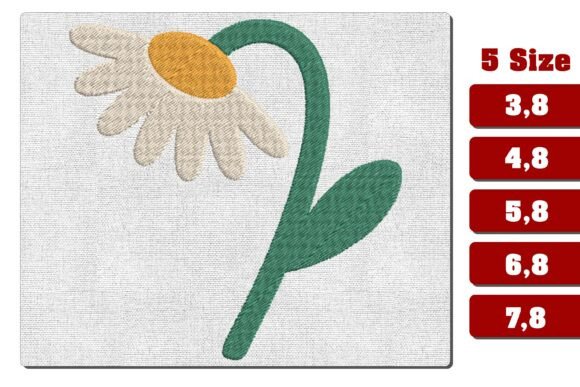
- Embroidered patch: At 3.8 in and 4.8 in, it holds crisp petal definition without over-stitching. Ideal for iron-on or sew-on patches on denim jackets, canvas totes, or kids’ backpacks—especially for Etsy sellers bundling branded accessories.
- Staff uniforms & aprons: On medium-weight cotton twill, the 5.8 in size anchors beautifully on chest pockets or left sleeves. Its low-to-moderate stitch density means minimal puckering—even after repeated laundering.
- Cap embroidery: The 4.8 in version fits cleanly on structured front panels. No crowding, no distortion—just clean negative space around the daisy that lets the cap fabric breathe.
- Tote bag design: At 6.8 in, it becomes a confident focal point on natural canvas or unbleached cotton. Paired with simple thread colors (ecru on oat, navy on cream), it elevates perceived product value without shouting.
- Product packaging & labels: Stitched onto fabric tags, linen pouches, or gift wrap bands, the daisy adds handmade authenticity—critical for craft businesses where tactile detail builds trust.
Where to Use It Thoughtfully (Not Just Automatically)
Even strong designs have boundaries—and respecting them protects your reputation and your client’s investment. With the Minimalist Daisy Flower Embroidery File, proceed with care on:
- Cap fronts under 4 in: Below 3.8 in, petal separation begins to soften. If your client insists on tiny cap branding, test first—or consider simplifying further (a single-petal variant would work better).
- Highly textured fabrics: Bouclé, heavy linen, or burlap demand extra stabilizer and possibly adjusted tension. The design’s open structure helps—but don’t skip a fabric-specific test run.
- Dark uniforms with light thread: White or pale yellow thread on black polyester can fade or fray faster. Opt for high-tenacity poly or rayon threads—and confirm wash-test durability before bulk production.
- Curved surfaces like hat brims or rounded mugs (if used on fabric wraps): Hoop stability matters more here. Use adhesive + tear-away stabilizer combo, and avoid pushing beyond the 5.8 in size unless you’ve verified hooping ease.
How This Design Strengthens Brand Identity—Beyond Aesthetics
A daisy isn’t just a flower—it’s shorthand for sincerity, growth, and approachability. When stitched consistently across aprons, caps, and tote bags, the Minimalist Daisy Flower Embroidery File becomes a silent brand ambassador. Customers remember how something feels—not just how it looks. That consistency builds recognition faster than any social media post. For handmade brands especially, this design signals attention to detail and intention behind every stitch. It says, “We didn’t slap on a logo—we chose something that belongs.” That nuance lifts perceived professionalism and deepens buyer engagement—especially among values-driven shoppers who support local and small-batch makers.
Essential Embroidery Designer Notes Before You Stitch
Before sending this digital embroidery file to production—or sharing it with a client—run these checks:
- Test it in black and white first—this reveals spacing issues, floating elements, or unintended overlaps invisible in color previews.
- Verify performance at your smallest intended patch size (e.g., 3.8 in). Does the center remain legible? Do petals stay distinct?
- Review thread color contrast against your target fabric—especially for commercial embroidery where color accuracy impacts brand guidelines.
- Inspect spacing between elements: tight gaps may collapse on knit fabrics or with dense stabilizer.
- Confirm hoop size compatibility—some versions may require larger hoops at the 7.8 in size. Don’t assume standard 5×7 works across all sizes.
- Always test on the exact fabric and stabilizer combination you’ll use in final production. Mockups lie; stitches don’t.
- Create a printable mockup for client approval—show it on a real apron photo or cap flat lay, not just a blank screen.
- Compare it beside other design assets: does it scale well next to your business logo? Does it share visual rhythm with your typography or packaging?
- Double-check commercial licensing terms—this is non-negotiable for small business merch, Etsy branding, or wholesale apparel. If unclear, contact the seller before purchase.
Remember: the Minimalist Daisy Flower Embroidery File isn’t just another Single Flowers download. It’s a flexible, scalable, and thoughtfully proportioned embroidery file built for real business outcomes—from staff pride to customer retention. Used intentionally, it transforms everyday items into touchpoints that reflect care, clarity, and quiet confidence. And in today’s crowded marketplace, that’s not decoration. That’s strategy.