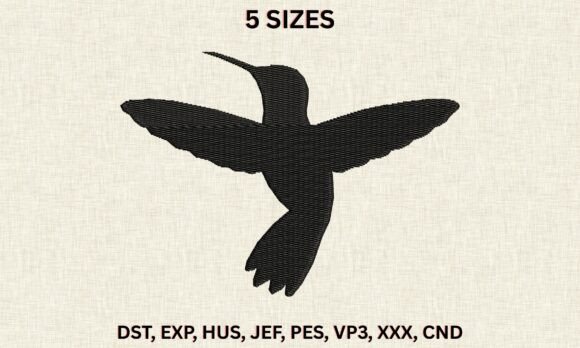
Hummingbird Bird DST PES Embroidery File
A Silhouette That Flies—Not Just Floats
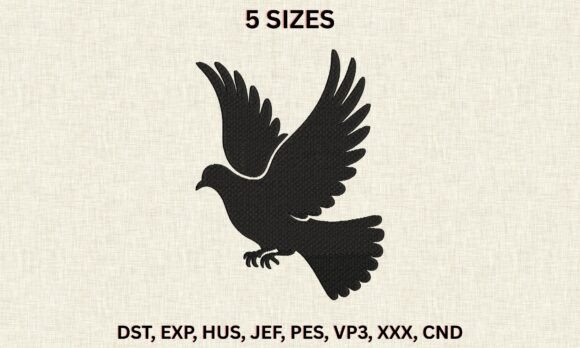
First impression? This Hummingbird Bird DST PES Embroidery File lands with quiet confidence—not flashy, not fussy, but unmistakably alive. It’s a clean silhouette, not an illustration: no wings blurred in motion, no exaggerated iridescence, just the elegant curve of a hovering bird, head tilted, beak pointed forward like a soft exclamation mark. It breathes garden calm—think lavender sachets, linen tea towels, baby onesies with botanical themes—not tropical chaos or cartoon energy. As a designer who’s stitched hundreds of birds, I appreciate how this shape avoids visual clutter while still reading clearly at 3–4 inches wide. It doesn’t shout; it invites pause.
Where It Truly Shines: Real Projects, Real Reactions
Last week, I prepped a batch of organic cotton tote bags for a local nursery boutique—and reached for the Hummingbird Bird DST PES Embroidery File. Why? Because customers don’t buy “a bird.” They buy *gentle intention*: a reminder of slow mornings, pollinator care, quiet joy. Stitched on the lower right corner of each bag in soft sage green thread, it looked handmade without looking labored. No one mistook it for mass production—yet it stitched cleanly, consistently, and held up through three rounds of testing on varying hoop sizes and fabric tensions.
It works especially well on structured, medium-weight fabrics: sweatshirt fleece (great contrast against heather grey), linen pillow covers (the silhouette reads beautifully against natural texture), and even lightweight denim aprons where you want charm without bulk. For Etsy sellers listing personalized baby embroidery, this file is a subtle winner—pair it with a monogrammed initial above or below, and it feels curated, not generic. I also used it as a standalone embroidered patch on a chambray cap for a spring craft fair: clean edges, no fraying, and enough presence to catch the eye without overwhelming the garment.
Where to Pause—Not Stop—Your Needle
This isn’t a design that forgives every condition. On thin, slippery fabrics like rayon challis or lightweight silk-blend scarves? Proceed with caution. The fill stitch density (while balanced) can cause slight puckering if stabilizer isn’t layered thoughtfully—use a light cutaway + tear-away combo, not just standard tear-away. On highly textured knits (think bouclé or heavy cable-knit sweaters), test first: the silhouette’s fine wingtip detail may soften or blur slightly depending on stitch penetration.
Curved surfaces—like the front panel of a structured cap—require re-hooping finesse. The hummingbird’s compact shape helps, but avoid placing it too close to the seam ridge; distortion creeps in near tight curves. And while it’s lovely on dark fabric (navy, charcoal, forest green), skip ultra-dense black-on-black combos unless you’re using high-contrast thread—say, metallic gold or ecru—to preserve definition. For holiday embroidery or wedding gifts, it reads as serene rather than festive—so pair it intentionally: think “spring shower gift” over “Christmas stocking.”
Stitching Clarity = Customer Trust
Here’s what matters when you’re selling: how the finished product makes your buyer *feel*. A crisp, confident Hummingbird Bird DST PES Embroidery File stitch tells your customer, “This was made with care—not rushed, not automated, not guessed.” That perception elevates perceived value instantly. I’ve seen buyers comment on Etsy listings saying, “The hummingbird looks so delicate but holds up perfectly”—that’s not luck. It’s a well-digitized machine embroidery design meeting the right fabric, stabilizer, and thread choice.
For small shop owners building brand consistency, this file plays nicely with minimalist palettes and earthy tones. It doesn’t compete with logos or typography—it complements them. Use it in printable mockups for your digital product previews, and it reads as premium, not placeholder. As design assets go, it’s versatile but never vague: it says “birds,” yes—but more precisely, it says “mindful nature,” “handmade calm,” “thoughtful gifting.”
Practical Designer Notes—Before You Hoop It
- Always test on scrap fabric matching your final project’s weight and stretch—even if it’s “just a tote bag.”
- Check thread color contrast in natural light: what reads softly on screen may disappear on oatmeal linen.
- Review stitch density visually in your embroidery software—if you see overlapping satin stitch lines or dense fill clusters in the wing area, consider reducing density by 5–8% for breathable fabrics.
- Confirm hoop size compatibility: this design fits comfortably in a 4x4 hoop, but verify before batching orders—especially if you’re running commercial embroidery jobs with tight deadlines.
- Inspect small details at 200% zoom: the beak tip and tail feather separation should remain distinct, not merged.
- Test in black-and-white mockups to assess silhouette strength—this file shines in monochrome.
- Compare light vs. dark fabric backgrounds using real swatches, not just your monitor.
- Use proper stabilizer: medium-weight cutaway for knits, lightweight tear-away for stable wovens.
- Verify licensing terms before selling finished products or bundling the Hummingbird Bird DST PES Embroidery File as part of a digital embroidery collection—some files permit personal use only.
Final Thought: A Design That Earns Its Place
This Hummingbird Bird DST PES Embroidery File won’t dominate your portfolio—but it might become your most-requested small-scale design. It’s the kind of embroidery file that gets chosen for baby blankets because it feels tender, not trendy; picked for boutique aprons because it whispers craftsmanship; added to holiday embroidery bundles because it brings quiet warmth instead of noise. It doesn’t try to be everything. It simply does one thing—capture hummingbird grace—with clean execution and thoughtful restraint. And in handmade product design, that kind of focus is rare, reliable, and deeply valuable.